

How to Protest 101
The Protesting Pocket Guide for Beginners and Veterans

TL;DR
Protests are your chance to stand in community and speak up loudly. Our country needs you!
Our free protesting course will be your protesting playbook and pocket guide no matter if you are a first time protestor or grizzled veteran.
While the risks remain low, it’s important to prepare for all plausible scenarios before attending a protest.
Maybe you’ve been a regular protestor since the feminist movement of the 70’s. Maybe you started with the 2017 Women’s March that marked the start of Trump’s first term and have only been to one or two protests in the last decade. Maybe you’re looking at the next No Kings rally coming up near you and thinking it’s time to get out there for the first time ever.
No matter which sounds most like you, hi, we’d like to apply for the role of your personal protesting assistant! Because we just launched a full length course specifically designed to help you understand your protesting rights, common misconceptions, and best practices. We suggest jumping in there if you’re ready to dive deep – but if you need a primer first, read on or check out our 5-minute mini course. Wherever you’re at, we’re glad to be a part of your protesting experience.
Let’s start by pointing out that there are plenty of reasons to protest today, and we’ve already argued why it’s such an important pillar of our democracy in our first Substack post on the topic, which you can read here.
Today, we’re shifting gears to take a closer look at what steps you can take to prepare for a smooth protesting experience.
Preparing to Protest
Let’s address the question we know might be on your mind: what about arrest? Here’s the reality – statistically, you’re more likely to get a parking ticket than arrested at a peaceful protest. But just like you’d bring an umbrella if rain was in the forecast, it’s smart to have a plan. Think of it as insurance you’ll probably never need.
Our strongest recommendation is to find a lawyer’s phone number you can call in a worst case scenario (i.e. arrest) and write it down with your personal emergency contact. If you don’t have a legal contact, you can get one from the National Lawyers’ Guild.
A few other smart precautions: use the buddy system, bring that emergency contact info, and yes, use the bathroom before leaving the house. (We’ll +1 to that last one!) But before we move on, we’d like to offer a reminder that protesting is still our Constitutional right, so you should still take your stand confidently.
Here’s the thing: The vast majority of protests are safe, legally protected, typically pretty boring to local law enforcement, and fun! Yes, fun! Because there is nothing more energizing and empowering than speaking out. There’s something magical that happens when you realize the person next to you – maybe a teacher, maybe a retiree, maybe a parent juggling kids – cares about the same things you do. That’s democracy in action.
We go in depth on the safety and legality of protesting in our brand new course, which is free for you to take now!
Sign Strategy
Less vital to your personal well-being, but endlessly more fun: let’s talk protest signs! Pointed, powerful, or petty (we don’t judge), this is your chance to figure out what you want to say and say it loud.
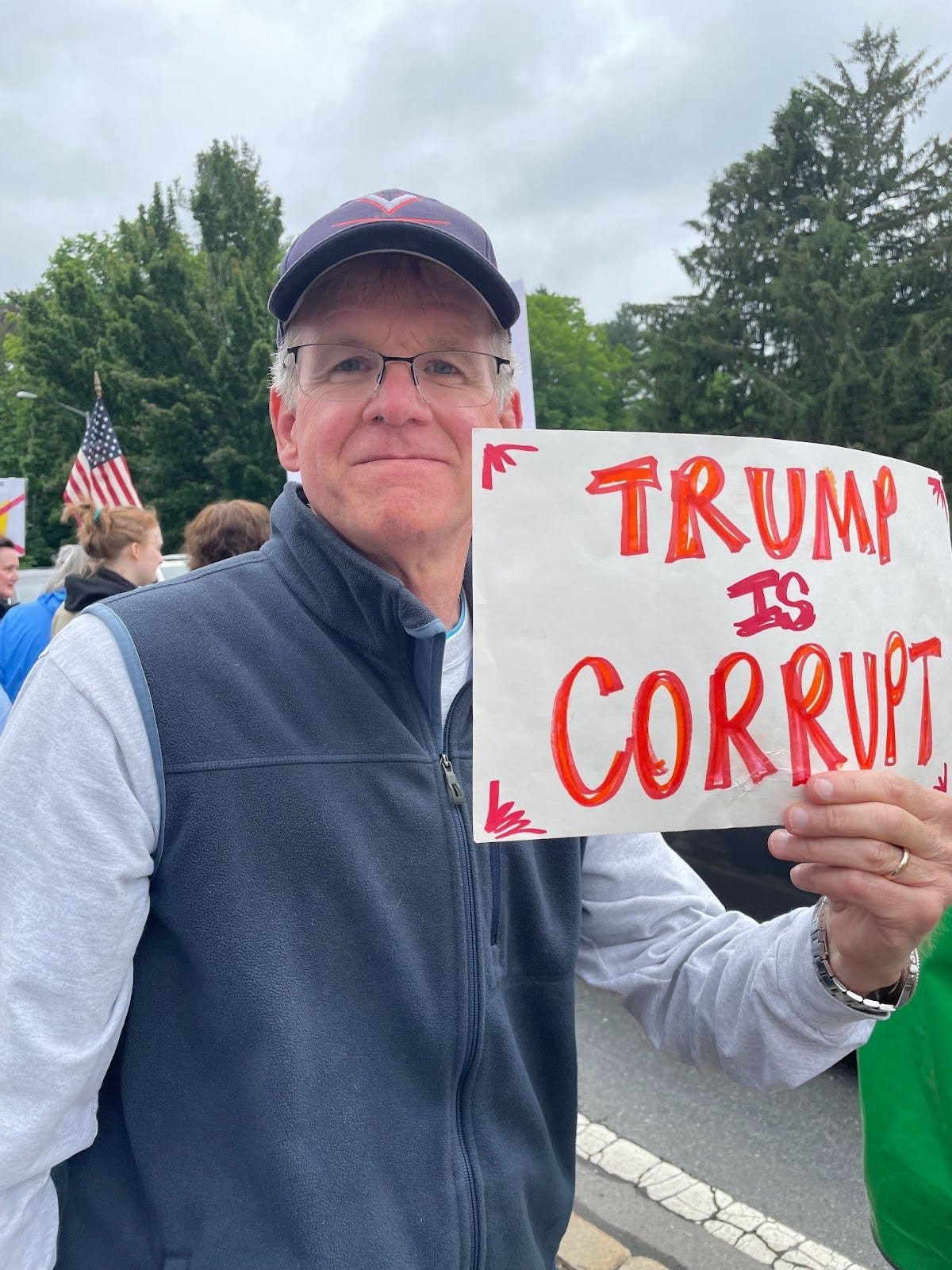
Our course will teach you how to make a sign that packs the biggest punch (hint: less is more), but right now, we want to empower you to express whatever weighs heaviest on you — as long as it’s within the realm of the protest. If you’re attending a reproductive rights protest, a sign speaking to immigration reform might offer solidarity, but won’t hit the mark. The “Trump is Corrupt” protest sign pictured at the top of this post, though, is a great example of messaging that gets straight to the point and is good for larger rallies where people oppose many of the current administration’s policies.
And honestly? Some of the best conversations we’ve had started with someone complimenting our protest sign.
What’s Next?
Here’s what we know for sure: when you show up, you’re not just holding a sign - you’re holding space for the community and country you want to see. You’re proving that democracy isn’t something that happens to you, it’s something you actively participate in.
We would tell you to get excited about this experience – and you should, but we also recognize, if you’re like us, that protesting means you’re some mix of scared, angry, frustrated, overwhelmed, and fed up. It’s entirely understandable to feel nervous or anxious. Just remember, you are not alone. MAGA wants us to believe we are the minority of voters. We are not.
We can tell you firsthand that few things are more energizing and powerful than protesting when you’re running low on faith in humanity. You’ll find out how many of your community members care just as much about you as you do them – because you’re there together in protest, demanding a better reality for all. Suddenly, you are not as alone or as isolated as you thought. And you realize that you, the citizen, have so much more power than you’re being led to believe.
That realization? That’s the same one that sparked every generation of Americans who decided their voice mattered. Whether this is your first protest or your fiftieth, you’re part of a long tradition of Americans who decided their voice mattered. And it does. If you’re ready to explore more ways to make your voice heard – from the ballot box to the campaign trail – we’re here to help you take whatever next step feels right for you.
Thank you for reading our latest Substack!
Connect with us everywhere!
Instagram: https://www.instagram.com/traindems/
Facebook: https://www.facebook.com/traindems/
Threads: https://www.threads.net/@traindems
Bluesky: https://bsky.app/profile/traindems.bsky.social
Linkedin: https://www.linkedin.com/company/traindems
Twitter: https://x.com/TrainDems